
The first phase will help people who have suffered burn injuries and their families from Kilimatinde, and the neighbouring villages. We have created links with the government hospital in Manyoni who transfer Burns patients to Kilimatinde. We are developing our admission and discharge procedures with them. We have begun a program of prevention and first aid awareness for seven villages. Once the Burn unit is open as a level 1 facility (working towards internationally recognised standards from Interburns) we will begin to open the service to a wider population and accept referrals from other hospitals. The communities who are being taught prevention and first aid for burns will be able to reduce the risk of burns and the injury damage from the burn, thereby improving their chances of survival.
The grant will be used to help establish a specialist (level 1) burns unit in a rural hospital in Kilimatinde Tanzania. The unit will be established in an existing area of a children’s ward which is being renovated to meet environmental and infection control standards. We are also working through a set of standards, check lists, teaching materials from Interburns (which is an international group of experts in Burns care) with whom we will link for expert help. These standards will ensure that the unit will be operated to the highest standards possible and keep up to date with research. We be will also need to buy medical and nursing equipment to ensure there is an adequate supply of materials to dress the wounds.
Franciscan Aid were able to send £4000 to the Kilimatinde trust for the renovation of the burns unit .

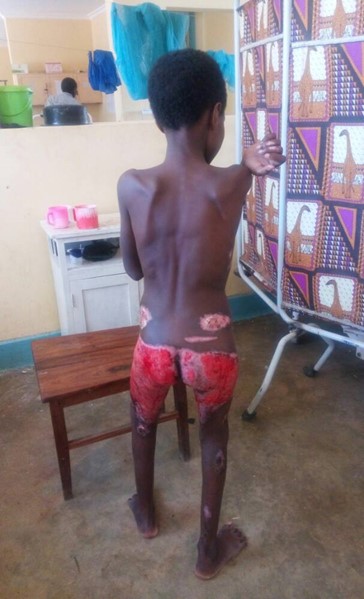
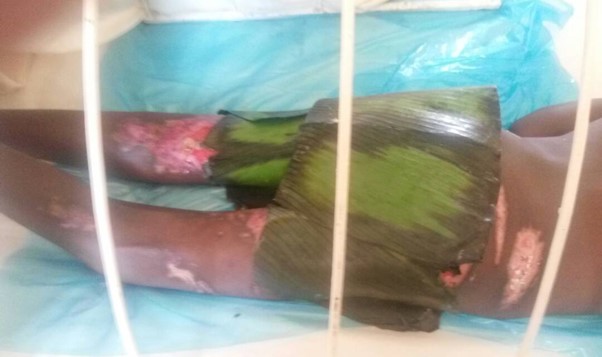
Burns is a significant problem in third world countries, and the mortality rate is very high. Even after admission to hospital wounds often become infected, causing patients to spend long periods in hospital and suffer disfigurement and contractures, as well as significant pain Many of the victims are children. Despite every effort to heal the wounds, staff at the hospital face further challenges due to poor environmental standards, lack of resources and insufficient training. Burn patients often die from infection, sepsis and dehydration.
Patients must provide their own food and family members prepare it for them. This is a particular challenge for burn victims because the treatment can be costly and the recovery rate slow. Some patients suffer significant malnourishment even before admission to hospital, because it is in one of the poorest parts of Tanzania, in the Anglican diocese of the Rift Valley. The hospital serves a rural community, and many patients have to walk to the hospital and turn up in very poor condition. The nearest specialist burns unit is 10 hours away by bus. Often people can’t pay for the treatment they receive. Most people don’t have any health insurance. We are trying to find a way of enabling people to access some health insurance through churches and charity hospital groups within Tanzania but as yet have not managed to do this. (If anyone in the society of St Francis has any experience of this or any advice it would be really helpful).
The application stated:
‘Franciscan Aid funds will help people who have suffered burn injuries and their families from Kilimatinde, and the neighbouring villages. We have created links with the government hospital in Manyoni who transfer Burns patients to Kilimatinde. We are developing our admission and discharge procedures with them. We have begun a program of prevention and first aid awareness for seven villages. Once the Burn unit is open as a level 1 facility (working towards internationally recognised standards from Interburns) we will begin to open the service to a wider population and accept referrals from other hospitals. The communities who are being taught prevention and first aid for burns will be able to reduce the risk of burns and the injury damage from the burn, thereby improving their chances of survival. We be will also need to buy medical and nursing equipment to ensure there is an adequate supply of materials to dress the wounds.’
Franciscan Aid were able to send £4000 to the Kilimatinde trust for the renovation of the burns unit .

In a further application:
‘Last year we managed to plant a garden and are growing bananas, papaya, mango, avocado, vegetables, and keeping chickens for eggs. We want to extend this to provide extra nourishment and vitamins to those patients who need it. We want to be able to prescribe food as an aid to nutrition which helps with the healing process, and in particular wound healing. Last year we nearly lost the garden through lack of water when the water pump failed and needed repair. This has now been mended and we are renovating the gutters and the water tank to ensure we capture water in the rainy season.
In addition to eating bananas we are using the leaves which are sterilised in a steam steriliser to dress the wounds. This has been researched in other areas but we intend to do further research on this when the unit opens, we hope, in August. Please note that we already have burn victims in the wards and are struggling to manage them, but the better environment and standards will significantly improve their chances of survival. We have developed a burn team and trained 3 nurses for 4 weeks at a specialist hospital in Moshi. We have a surgeon who comes to the hospital monthly and is able to do skin grafting which is an essential treatment for full thickness burns, as yet we haven’t got the relevant equipment to do this work. We have created a Burn team who are continuing to work to develop best practice’
Reports:
Report sent for August 2017-july 2018 Under 1 year: 1 male. Under 5 years: 5 male 1 female. 5-60 Years: 3 Male 3 Female. Total 12 burn cases (1 child death). We treated patients between 10 & 35% TBSA although at this point anyone can turn up at the hospital for treatment. The cases through OPD and local pharmacy figures are not included in this report though I know there were many minor burns treated there. Most of our admissions had not had first aid, though first aid was taught in January 2018 and in August 2017 through Kilimatinde village schools and in surrounding villages via health care workers. Working on prevention and first aid is part of our commitment to providing our burn care service.
Each village is visited each month by our Med Safari team with a register to record incidence of burns. The recording of incidence was captured by 2 villages (see chart below) although the recording is disappointing and awareness raising of burn cases has begun and is continuing.
Report from Franciscan Aid Project Link in 2018.
I visited Tanzania in July/august to assess the progress on the burns unit .The unit is looking very good and I can confirm that your gift has been used properly to create a really good environment for the care of burn victims .The unit still requires final finishing and equipment etc. we decided to delay the opening till November however we found 4 children in a nearby hospital who were desperately in need of our care so we made a final push and we opened it to those children on 10.08.18 .
 Franciscan Aid