
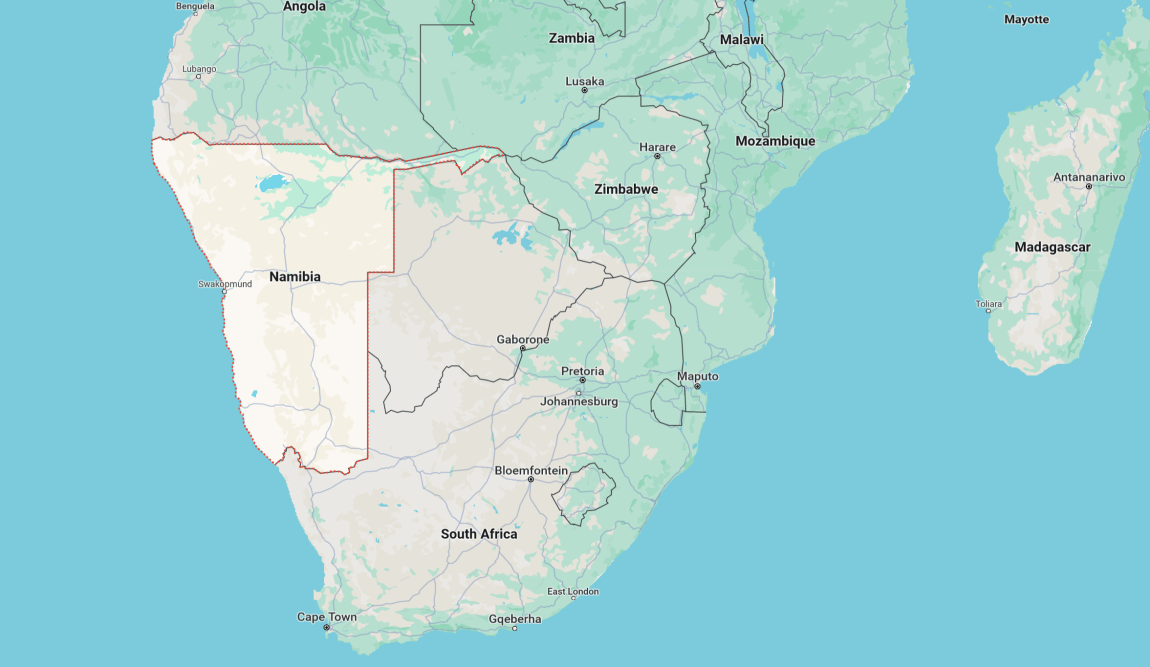
Our connection with Namibia comes through Tertiaries in England, way back in 2013.
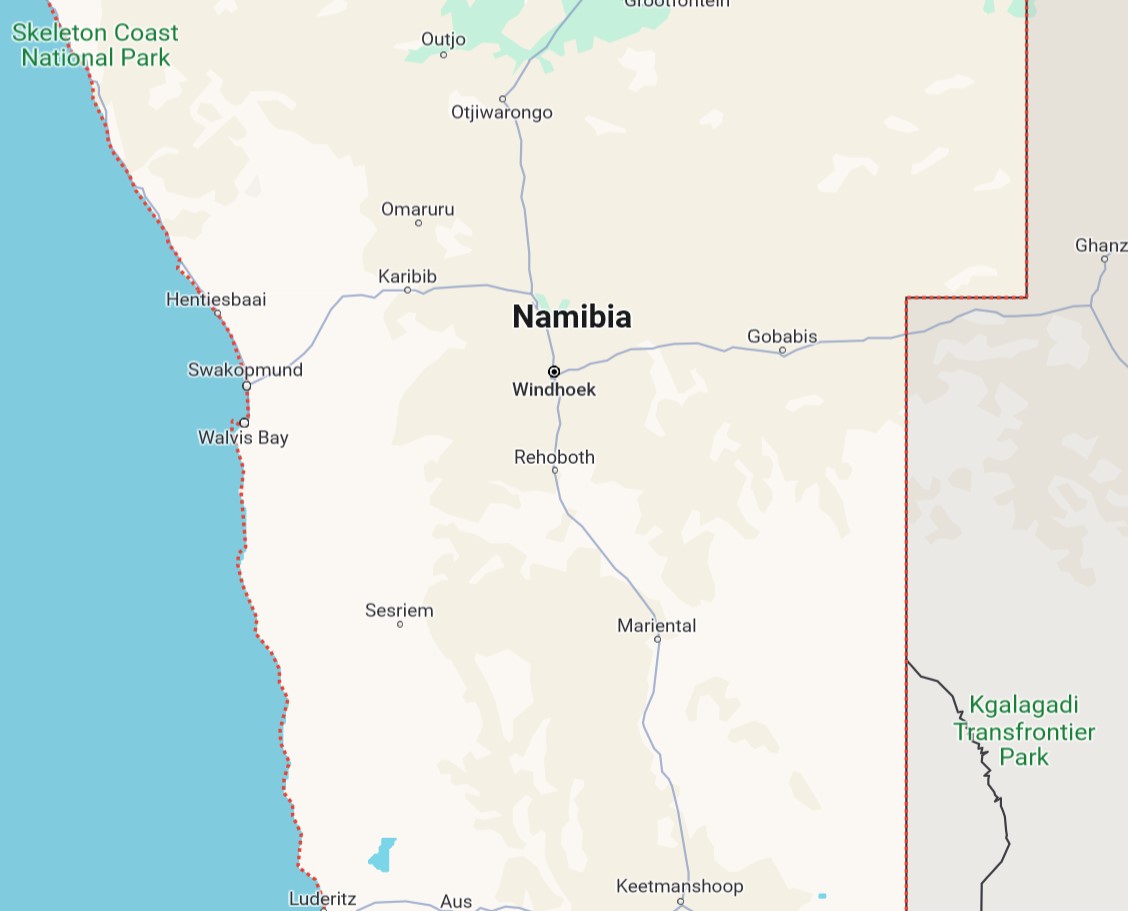
The Parish Priest wrote:
‘My congregation consist mainly of the less privileged; illiterate and very poor. When I met with them in June 2010, they attended service under a tree. We started with fundraising. Amounted as little as N$1500 (about £100). I observe a spirit of willingness and commitment among them and that motivates me to stay with them. In the meantime I started to learn their language. I conducted their service in Kwayama, and can read it fluently. This makes the communication much better.
We succeeded to build a centre for children in their early development stage at the end of 2011 (2 – 6 years). Education seems an essential for that part of our community and the earlier the better. Two plots have been purchased; three classrooms, two toilets, a soup kitchen and an office-block were built. In the beginning of 2012 sixty children have been enrolled.’ The school has an assured future, because the government has committed to 50% of its running costs provided the Teachers have Grade 10 and commit to enrolling in in-service training.
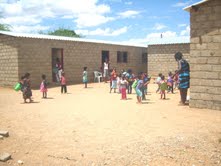
The photographs show the young people attending the school.
Education remain an importance for our community. The church is about 5 kms from town, to the nearest library. Our people cannot read and write… School drop-outs rate from as low as ten years. As soon as they leave school the girls fall pregnant and the boys become involved in criminal activities. If the situation continues like this we will never overcome poverty. Poverty will remain with us and we will remain dependent. If we could bring a library to this area we as the Church will use measures to bring awareness to the community on how important it is to beat illiteracy.’
The Parish Priest asked, in the application for funds to be used to equip a new library alongside the ECD (Early Child Development) Centre built in 2011, to make the community more aware of the value of education, and give the school-age children opportunities to study, and encouragement. The nearest library is in the centre of Rehoboth, 5 kms from where this community lives. The drop-out age from school is often only 10 years old, due to the lack of encouragement received. Funding is already pledged from 2 sources for the building itself, and the balance is being sought elsewhere. The funding for the complex already built came from the Archbishop of Canterbury’s Fund.
Equipping the building is to include shelves, books, two computers with printers, toilet, and if possible a photocopier.
Franciscan Aid have supported by funding book shelves, books, two computers with printers, tiolets and a photocopier.
 Franciscan Aid